What We Do

Services

A closer look at the concrete work we take on, from new pours to patch repairs.

Home › Services

Everything we take on

Every job below is one we do ourselves across Porterville.

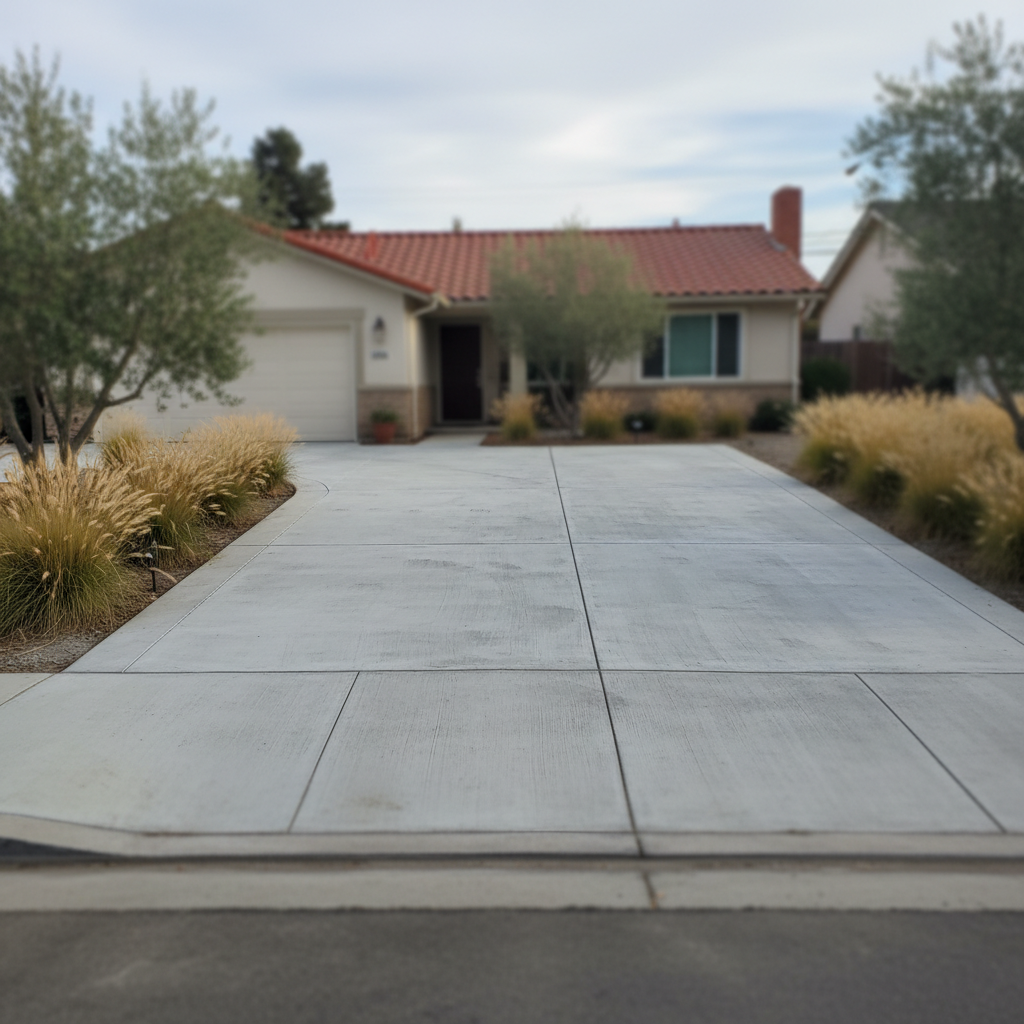
Concrete Driveways

We pour driveways with a compacted aggregate base underneath and rebar tied in for anything that'll carry a vehicle. Control joints get cut the same day, before the slab decides on its own where to crack. Expect to stay off it for about a week before regular vehicle traffic.

Concrete Patios

Patios get sloped a quarter inch per foot away from the house so water runs off instead of sitting against your foundation. We finish in broom, exposed aggregate, or a stamped pattern, whatever matches the rest of your yard.

Stamped Concrete

Stamped concrete is a real poured slab with a stone, slate, or brick pattern pressed into it while it's still workable, then colored and sealed. It costs less than pavers or natural stone and holds up just as long if the base underneath is done right. The stamping has to happen within a narrow window after the pour, so timing matters more here than on a plain slab.

Concrete Repair

If a slab has cracked, heaved, or spalled, we cut out the damaged section along existing joint lines and tie new concrete into what's staying. Trying to resurface over a cracked slab usually just telegraphs the crack back through in a season or two, so we'd rather cut it out.

Concrete Slabs

Garage floors, shed pads, and equipment slabs get the same base prep as a driveway, just without the traffic load calculations. We'll pour to whatever thickness your structure or manufacturer spec calls for.

Concrete Sidewalks & Walkways

Walkways get formed to whatever width and path you want, with joints spaced to control cracking on a narrow slab. These are usually quicker jobs, a day or two from forms to finish.

Concrete Steps & Porches

Steps and porch slabs take more layout work than a flat pour, since rise and run have to come out even and match code. We form and pour these to tie into your existing foundation so they don't settle separately from the house.

Retaining Walls

Retaining walls hold back graded soil and need a footing deep enough to handle the pressure behind them, plus drainage so water doesn't build up and push the wall over. We size the footing to the wall height and the slope, not a flat rule of thumb.

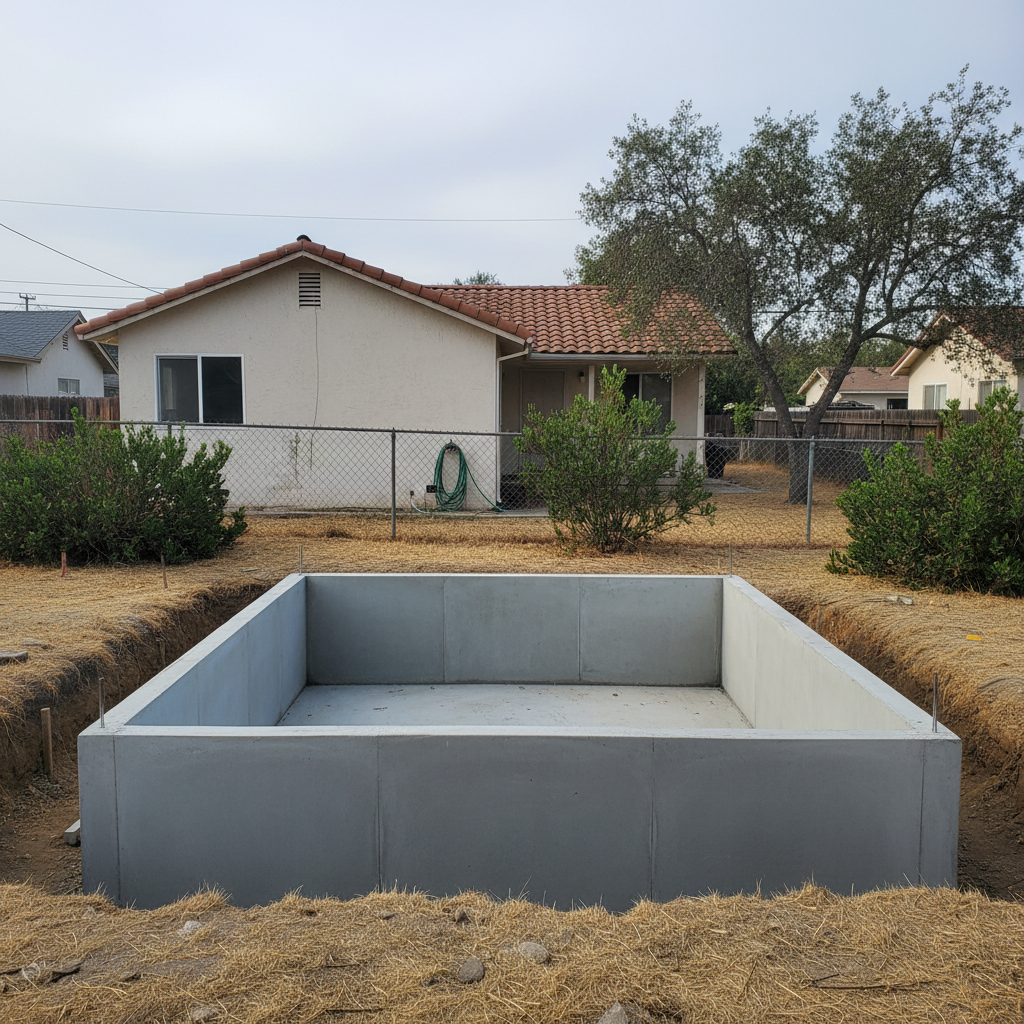
Concrete Foundations

Footings and foundation slabs for additions, detached garages, and outbuildings get poured to the depth and reinforcement your plans call for. We coordinate the pour around your inspection schedule if permits are involved.

Decorative Concrete & Exposed Aggregate

Exposed aggregate, acid staining, and colored concrete all start as a standard pour, the look comes from how the surface is finished and treated afterward. This works well on patios and walkways where you want some texture instead of a smooth broom finish.

How It Works

Four steps, and no surprises in any of them.

01

We come and look

You tell us what you want doing, we look at what is actually there, and we ask the awkward questions early.

02

You get a price

In writing, itemised, free. If something might add cost later we flag it now rather than at the end.

03

We do the work

Same crew throughout. We cover your floors, keep the dust down and tidy up before we leave each day.

04

We walk it with you

You point out anything you are not happy with and we fix it before the invoice, not after.

Where We Work

All of this, across Porterville, CA

This concrete work is available throughout the Porterville area and nearby towns.

Porterville, CA
Visalia, CA
Bakersfield, CA
Hanford, CA
Tulare, CA
Delano, CA
Dinuba, CA
Lindsay, CA
Farmersville, CA
Exeter, CA
Woodlake, CA
Common Questions

Things worth asking

What to expect once a concrete project is underway.

Do I need a permit to pour a new driveway or patio?
Permit requirements depend on the project and local building codes; a standalone patio usually doesn't need one, but a driveway approach tying into a city street often does. Checking with the local building department before work starts avoids problems later.
How long does it take to pour and cure a concrete slab?
Forming and pouring a standard driveway or patio usually takes one to two days, and the concrete can typically handle foot traffic after about 24 to 48 hours. Full cure for vehicle weight takes closer to seven days, even though the surface looks finished much sooner.
Can concrete work be done on a tight budget?
Concrete costs can be adjusted by choosing a plain broom finish over stamped or colored concrete, reducing slab thickness where it isn't load-bearing, or phasing a larger project into sections. Cutting corners on base prep to save money is the one place that shouldn't happen.
Do you guarantee your concrete work?
A reputable concrete contractor stands behind cracking, spalling, or settling that results from workmanship, typically with a written warranty covering a set period after the pour. Cracking caused by ground movement outside the contractor's control, like a nearby tree root, is usually handled separately.
Who will I be dealing with during the project?
On most concrete jobs, the same crew that measures the site and gives the quote is the crew that forms, pours, and finishes the slab. Having one point of contact throughout the job makes it easier to handle questions about timing or changes.
What's the difference between rebar and wire mesh in a slab?
Rebar sits suspended in the middle to lower third of a slab and holds its position through the pour, making it the better choice for driveways and anything carrying vehicle weight. Wire mesh is lighter and cheaper but tends to sink to the bottom of the pour unless it's chaired up properly, so it suits light-duty slabs better.
Can I still use my driveway or yard while the work is being done?
Access to a driveway or patio is blocked from the day forms go in until the concrete cures enough to take weight, generally several days for foot traffic and about a week for vehicles. Parking and access need to be planned around that window in advance.
What should I do to prepare the site before the crew arrives?
Clearing the area of vehicles, furniture, potted plants, and sprinkler heads near the work zone speeds up the job and protects anything that could get damaged during demolition or pouring. Marking any known irrigation or electrical lines ahead of time also helps.
What happens if you find something unexpected once the old concrete is removed?
Removing old concrete sometimes uncovers a broken irrigation line, poor existing base, or washed-out soil underneath, and that gets flagged before pouring continues. Any extra work needed to fix it is typically quoted separately before moving forward.
How do I take care of new concrete after it's poured?
New concrete needs about a week to cure before it takes vehicle weight, and keeping it damp or covered in the first few days helps it cure evenly instead of cracking from drying too fast. After that, sealing every few years and keeping deicing salts off it extends how long the finish lasts.

Not sure what you need?

Describe the problem and we will tell you what it probably is. No obligation.
Call (559) 987-3232